Three Gorges Dam
EnergyThe world's largest hydropower station by installed capacity, at 22.5 GW, and the main flood-control structure on the Yangtze.
Yichang, Hubei
The People's Republic of China is the world's most populous country and its second-largest economy, spanning roughly 9.6 million square kilometres of East Asia — from the Himalayan plateau and western deserts to the dense river deltas and megacities of the eastern seaboard.
China ranks 4th of 196 on national capability, at the frontier in four of nine domains, and leads the world in research output across most of them. Its bilateral ties anchor a dense network of partners even as friction with the US and its allies grows, and across 2.3 million words of sovereign speech, Beijing talks far more in the present than it dwells on the past or looks to the future.
China is one of only a handful of nations rated at the frontier across multiple domains of national capability. Across the nine GINC capability domains — spanning hard, soft and economic power — it ranks 4th of 196 nations overall, holding Tier 1 (frontier) status in four domains and Tier 2 in three more.
The GINC framework decomposes national capability into 254 measurable capabilities, each rated on a common scale and benchmarked against every other nation. The cards below summarise where China leads, where it lags, and how its capabilities spread across the rating scale.
Three views of China's capability position. The Pareto ranks show how the leading nations compare on their counts of frontier (T1), strong (T2) and solid (T3) domains — the methodology behind the headline ranking.
The middle card gives China's tier in each of the nine domains, and the distribution shows how all 254 capabilities are spread across the rating scale, split by power dimension.
Every one of China's 254 capabilities, rated on the GINC scale and ranked by score. Each rank badge is coloured by its capability domain, so clusters of strength and weakness stand out at a glance.
Sort by Rating, Score or Rank to reorder the board; click a column again to flip the direction. The top is dominated by China's frontier domains, while lower-rated capabilities cluster where it trails the global frontier.
The National Infrastructure Index maps the physical assets national life runs on — power stations and grids, water systems, ports, railways and airports, data networks, payment systems and launch sites. Each asset is placed in a Strategic Infrastructure capability group, so it can be read against the ratings in the National Capability index above.
Assets are chosen for how much of the economy and state depends on them and how hard they would be to replace. Each card records what the asset is, the category it belongs to, what it does and where it is.
Example assets. These twenty cards are modelled on China's most critical infrastructure and show on every nation page until each nation's own assets are mapped.
The world's largest hydropower station by installed capacity, at 22.5 GW, and the main flood-control structure on the Yangtze.
A 16 GW dam on the Jinsha River, built around sixteen 1 GW turbines, the largest single units in service.
A ±1,100 kV direct-current line carrying 12 GW more than 3,000 km from Xinjiang's power bases to the eastern grid.
China's first large commercial nuclear plant, in service since 1994, with much of its output sold to Hong Kong.
A canal carrying Yangtze basin water more than 1,400 km north from the Danjiangkou Reservoir to Beijing and Tianjin.
The 1,318 km trunk line between the two largest cities, opened in 2011 and one of the busiest high-speed routes in the world.
The world's busiest container port since 2010, including the automated Yangshan deep-water terminals.
The world's largest port by cargo tonnage, handling iron ore, crude oil and coal for the eastern industrial belt.
The capital's second international hub, opened in 2019 around one of the largest single terminal buildings in the world.
A 55 km bridge and undersea tunnel system linking the western and eastern shores of the Pearl River Delta, opened in 2018.
The 1,956 km line from Xining to Lhasa, crossing the Tanggula Pass at 5,072 m, the highest railway in the world.
One of eight national data centre hubs under the East Data, West Computing programme, hosting major cloud providers.
A 2,000 km quantum key distribution trunk line through Jinan and Hefei, completed in 2017 for secure government and bank links.
CIPS clears and settles cross-border payments in renminbi, launched in 2015 to extend the currency's international reach.
The coastal launch site for Long March 5 heavy-lift rockets, used for the Tiangong station modules and lunar and Mars missions.
China's first launch site, founded in 1958 in the Gobi Desert, and the base for every crewed Shenzhou mission.
The national satellite navigation system, providing global positioning and timing since 2020 from its Beijing control segment.
The world's largest known rare-earth deposit and the core of China's rare-earth mining and refining supply chain.
A weir and channel system built around 256 BC that still irrigates much of the Chengdu Plain's farmland.
China's leading maker of 3D NAND flash memory, central to the drive for a domestic semiconductor supply.
The National Development Index tracks the events that move a nation's capability — policy decisions, technological milestones, economic turns and external shocks — and places each one on the record with the date it happened and what followed from it. It is the narrative counterpart to the indices: where a rating says where China stands, the index says how it arrived there.
Recent developments cover the current cycle, close enough that their consequences are still unfolding. Historical developments are the inflection points behind the present position — the decisions and events a reader needs in order to read the ratings above in context.
Following the end of the last glacial period around 8000 BCE, pottery-making Neolithic cultures emerged across China. These laid the material foundation for later settled society.
After 2000 BCE a Bronze Age culture, named after the Erlitou site, emerged in the Central Plain. It has been controversially identified with the Xia, traditionally regarded as China's first dynasty, though no written records confirm this.
The Shang purportedly succeeded the Xia around 1600 BCE, its early phase tentatively linked to the expansionist Erligang culture. Divinatory inscriptions in oracle bone script attest the Late Shang and are the ancestor of modern Chinese characters.
Around 1046 BCE the Zhou toppled the Shang and ruled a vast, loose confederation of vassal states across central China. Regional lords progressively weakened central authority.
The failure of centralised Zhou power in 771 BCE gave way to constant regional warfare, as small aristocratic polities consolidated into seven territorial Warring States. The era produced Confucianism, Daoism, Mohism and Legalism, and classics such as the Analects and Tao Te Ching.
By the 6000s BCE farming communities had settled the lower Yellow River basin, becoming increasingly complex, urbanised and stratified. Many suffered an unexplained population collapse in the late 2000s BCE.
The imperial era began in 221 BC under the Qin Dynasty and lasted until the fall of the Qing in 1912, during which China alternated between periods of unity and disunity under a succession of dynasties. Chinese civilisation itself dates to at least the thirteenth century BC, first under the Shang (to 1046 BC) and then the Zhou (1046–221 BC) dynasties.
After rapidly conquering the other warring states in the 220s BCE, the Qin ruler declared himself Huangdi in 221 BCE and founded an autocratic Legalist state of commanderies and counties. The dynasty lasted only fifteen years, falling to revolt and civil war after his death, but it began two millennia of imperial rule.
The Han restored centralised control and legitimised rule through Confucian scholarship. Campaigns against the Xiongnu extended influence into Central Asia and opened the Silk Road, while merchants built maritime routes linking China, Southeast Asia and India.
Cai Lun, a court official, improved techniques for producing paper from tree bark, hemp and rags into a cheap and practical writing material. The innovation spread across China and, over subsequent centuries, to the rest of the world.
Uprisings and warlordism in the 100s and 200s CE broke the Han state, and by 220 the empire had split into three kingdoms. A brief reunification by the Jin in 280 collapsed into civil war and further division.
During the wars of the Northern and Southern dynasties in the 400s, Buddhism entered China along Silk Road trade routes. It became a durable component of Chinese religious and cultural life.
The Sui reunited the country in 589 after centuries of warfare and constructed the Grand Canal linking northern and southern China. The waterway permanently integrated the empire's economic regions, though the dynasty itself collapsed in the 610s.
Succeeding the Sui, the Tang centralised the state, pacified surrounding regions and expanded international trade around its capital Chang'an. Examination reform and a flourishing of art, poetry and scholarship set enduring institutional and cultural patterns.
The An Lushan rebellion of 755–763 shattered Tang military and fiscal power. The dynasty gradually fragmented thereafter and collapsed completely in 907.
Rising in 960 and pressed by the Liao and Western Xia, the Song built a heavily centralised state and army that first used gunpowder in war. Printing, industrial metallurgy, hydraulic machinery and booming trade accompanied the growth of a powerful scholar-official class.
The fall of the Song capital in 1127 pushed the dynasty into southern China. The period saw the emergence of Neo-Confucianism as a revivalist philosophical movement.
From 1206 the unified Mongols conquered the Western Xia and the Jin within fifty years, alongside campaigns reaching Europe. The empire later split into separate khanates.
Kublai Khan founded the Yuan in 1271 and completed the conquest of the Song by 1279. The Yuan maintained a Mongol elite culture and an ethnic-occupational hierarchy while connecting China more deeply to Eurasian trade.
Catastrophic flooding, epidemic and famine in the 1340s triggered widespread rebellion against Yuan rule. The unrest culminated in the dynasty's overthrow.
A peasant rebel leader declared himself emperor in 1368, ending Mongol rule. The Ming built a new capital at Beijing with the Forbidden City, while the lower Yangtze remained the wealthiest region.
European colonisation of the Americas brought new crops and silver into the Ming economy, and trade grew. The population doubled and a publishing industry produced vernacular works including the Four Classic Novels.
From the late seventeenth to the end of the eighteenth century the Qing enjoyed economic growth and territorial expansion into Tibet and much of Central Asia. This defined the maximal territorial extent later inherited by modern Chinese states.
Proclaiming the Qing in 1636, the Manchu overcame a Ming state unable to contain peasant rebellion, killing the last Ming claimant in 1662 and taking the Taiwan rump state in 1683. Qing rule reunified and then greatly enlarged the empire.
In the nineteenth century the Qing formally adopted Zhongguo as the name of the state. The change reflected the empire's engagement with a world of named nation-states.
In the nineteenth century the Qing suffered heavily from overextension by territorial conquest, insolvency, civil war, imperialism, military defeats and foreign expropriation of ports and infrastructure, including the Opium Wars and the Taiping Rebellion.
The war began after Chinese officials confiscated and destroyed opium stocks held by British traders in Canton. Britain's victory imposed the first of the "unequal treaties": the 1842 Treaty of Nanjing ceded Hong Kong Island to Britain, opened five treaty ports, permitted Christian missionary activity and loosened trade restrictions. It began a century of foreign encroachment on Chinese sovereignty that Chinese historiography calls the century of humiliation.
Amid economic crisis and internal unrest, the Taiping Rebellion caused the deaths of millions. Reformist Qing factions responded with the Self-Strengthening Movement to adopt Western weapons and technology, with limited effect across most of the empire.
Japan's victory cost China Taiwan and exposed the failure of Qing self-strengthening. Defeat spurred the growth of both reformist and revolutionary political movements.
An imperial drive for reform in 1898 was terminated by a coup within the court. Its failure hardened revolutionary sentiment against the dynasty.
Foreign armies crushed the Boxer uprising by 1901, further humiliating the Qing. The dynasty again attempted reform, but anti-Manchu revolutionary feeling continued to grow.
An uprising that began in Wuchang in October 1911 spread rapidly across China's provinces, leading the last Qing emperor, Puyi, to abdicate in February 1912. Sun Yat-sen's provisional government proclaimed the Republic of China, ending more than 2,000 years of dynastic rule.
In 1912 China replaced its traditional twelve-month lunisolar calendar with the Gregorian calendar for official use. The change aligned the state with international timekeeping.
Yuan suppressed his main opposition and governed dictatorially, attempting abortively to restore the monarchy before dying in 1916. His death opened the Warlord Era, in which regional warlords held power, Tibet and Mongolia declared independence, and the republican government controlled little beyond Beijing.
A crackdown on student protest in 1919 triggered mass agitation for cultural and political upheaval. Many intellectuals embraced Western political ideas, including communism.
Allied with the nascent Chinese Communist Party, the Kuomintang campaigned northwards to reunify the fragmented country. The alliance broke down within a few years.
In 1927 the ruling Kuomintang under Chiang Kai-shek violently expelled its communist allies and secured the allegiance of northern warlords, forming a new national government at Nanjing. The Chinese Communist Party was driven into the countryside and regrouped in the northwest, opening a civil war between the KMT and the CCP that would shape China for two decades.
Japan seized Manchuria in 1931 and launched a full invasion in 1937, occupying most major cities and committing numerous atrocities against civilians. A renewed CCP–Kuomintang coalition resisted in what became a theatre of the Second World War.
War broke out after a clash at the Marco Polo Bridge near Beijing in July 1937 and merged into the wider Pacific theatre of the Second World War after 1941. Estimates of Chinese military and civilian deaths vary widely, with most ranging from 15 million to 20 million.
With Japan's defeat in 1945 China regained Manchuria and Taiwan and joined the United Nations as a founding member. Civil war between the CCP and Kuomintang resumed the following year.
Government surveys record forest cover growing from a tenth of the territory in 1949 to a quarter by 2024. The gain partly offsets environmental deterioration caused by rapid twenty-first century development.
Mao declared the People's Republic from Tiananmen on 1 October 1949 after the Communist Party's victory over the Nationalist government in the Chinese Civil War, while the defeated Republic of China administration relocated to Taiwan and continued to claim legitimacy. The new people's democratic dictatorship restructured the economy under state control, promoted literacy and women's equality, expanded heavy industry and pursued land collectivisation in which upwards of a million people died.
The Politburo met on 30 July 2026 and pledged a more proactive fiscal policy after growth eased to 4.7 per cent year on year in the first half of 2026. It also endorsed an AI Plus initiative to spread artificial intelligence use across the economy.
The commerce ministry added 10 US rare-earth companies to its export control list in June 2026 and 14 European Union firms in July, despite the one-year truce agreed with Washington in October 2025. The moves reignited tension over minerals critical to defence and high-tech manufacturing.
Trump visited Beijing from 13 to 15 May 2026, following the trade truce agreed with Xi at the Busan summit the previous October. Both sides described the talks as successful, though few new agreements were confirmed.
The attack took place in the capital's Fangshan district on 29 March 2026. State media gave limited details of the attacker's identity or motive, consistent with restricted coverage of similar incidents in preceding years.
Full-year sales figures reported on 2 January 2026 put the Chinese carmaker ahead of Tesla for the first time on an annual basis. The milestone underscored the shift of the global electric-vehicle industry's centre of gravity toward Chinese manufacturers.
China announced on 24 January 2026 that Zhang Youxia, its highest-ranked general and vice-chairman of the Central Military Commission, was under investigation for suspected serious violations of discipline, alongside General Liu Zhenli. The probe followed the expulsion of nine generals, including fellow vice-chairman He Weidong, the previous October.
The two-day exercise on 29 and 30 December 2025 rehearsed amphibious and air-assault operations off Taiwan's east coast alongside long-range rocket fire, while coastguard vessels patrolled around Taiwan's outer islands. Reuters described it as the largest such drill to date.
The Fourth Plenum met in Beijing from 20 to 23 October 2025 to set the framework for national development from 2026 to 2030, prioritising technological self-reliance and national security. Unlike previous plans, it did not include a headline GDP growth figure for the period.
Xi Jinping and Donald Trump met for the first time in six years on 30 October 2025, agreeing to ease tariffs and suspend export controls on rare earths and high-technology products for a year. China also pledged to resume large-scale purchases of US soybeans.
The crewed mission lifted off from the Jiuquan Satellite Launch Center on 31 October 2025 carrying 32-year-old Wu Fei, alongside a pair of research mice, to the Tiangong space station. It formed part of China's continuing crew-rotation programme for its orbital outpost.
China curbed COVID-19 transmission with lockdowns, quarantines and contact tracing until widespread protests in November and December 2022. The policy's end marked a rare public reversal of central policy.
The National Bureau of Statistics estimated a fall of 850,000 people from 2021 to 2022, with deaths outpacing births since 2022. Fertility of around 1.0 and 7.92 million births recorded in 2025, the lowest since at least 1949, point to sustained shrinkage and rapid ageing.
Although the largest CO2 emitter in absolute terms, China emitted only 8 tons per capita as of 2020 and has prioritised curbing pollution. It is the world's leading investor in renewable energy, spending CN¥3.6 trillion in 2022, and clean sources supplied 41.6% of electricity in 2025.
Disputes over Aksai Chin and Arunachal Pradesh led to military clashes in 2020. Of 23 border disputes since 1949, six remain unsettled.
From 2020 the property sector, whose assets by the late 2010s far exceeded stocks, bonds and deposits combined, fell into crisis. Debt stood at almost 300% of GDP in 2020, with household debt near 65%.
Following the 2019–2020 protests Beijing cracked down on the pro-democracy movement in the special administrative region. Much of Hong Kong's political autonomy was removed.
A 2018 constitutional amendment removed the two-term limit on the presidency, allowing Xi Jinping to gain a third five-year term as president in 2023.
Chinese academic output overtook all other countries in 2016. The state has since emphasised technocratic leadership, promoting scientific experts nationally while bringing firms such as Tencent and Alibaba under closer regulation.
A two-child policy was introduced in 2015, and in July 2021 family size limits and penalties for exceeding them were abolished. The relaxations have not reversed collapsing fertility.
Over the past decade China has increased its global outreach, including military deployments and participation in international organisations, and in 2013 unveiled the Belt and Road Initiative global connectivity plan. Many nations signed BRI agreements to attract Chinese investment, while others raised concerns about opaque projects, financing and potentially unsustainable debt.
Xi Jinping became General Secretary of the Chinese Communist Party and Chairman of the Central Military Commission on 15 November 2012, and President in 2013. He has since run a far-reaching anti-corruption campaign, continued market-oriented policies while maintaining tight political controls, removed presidential term limits, and expanded Chinese economic influence abroad through the Belt and Road Initiative.
By 2011 the PRC's economy had overtaken Japan's to become the second largest in the world, the fruit of three decades of rapid growth.
A network of internment camps established in the late 2010s has evolved into a system of prisons and forced labour. The programme has drawn international scrutiny that Beijing rejects as interference in internal affairs.
After heavy investment in elite sport from the 1990s, Beijing staged the 2008 Summer Games. The city later hosted the 2022 Winter Olympics, and China hosted the Asian Games in 1990, 2010 and 2022.
Following the 2003 SARS outbreak the World Health Organization judged biosafety standards at Beijing's National Institute of Virology inadequate. The episode exposed weaknesses in public health governance.
In 2003 China became the third country to launch humans into orbit independently. Later programmes have landed robotic craft on the Moon and Mars, and the Tiangong station has hosted crewed operations since 2021.
Since 2000 output has grown more than twenty times over, giving China the second-largest economy by GDP and the largest by purchasing power parity. It accounts for 28% of global manufacturing as of 2024 and has lifted roughly 800 million people out of extreme poverty.
Hong Kong returned to Chinese rule at midnight on 1 July 1997 under the 1984 Sino-British Joint Declaration, ending more than 150 years of British colonial administration. China agreed to govern the territory under a one country, two systems framework guaranteeing a separate legal and economic system until 2047.
Troops and tanks cleared weeks of student-led demonstrations in Beijing on 3 and 4 June 1989, firing on protesters and bystanders. Estimates of the death toll range from several hundred to more than 1,000; no official figure has been published and the events remain heavily censored in China.
The constitution in force dates to 1982, succeeding two earlier texts. Since the 1980s the CCP has framed its programme as socialism with Chinese characteristics, an adapted Marxism–Leninism emphasising a market economy.
Government figures record the urban share rising from a fifth in 1980 to over two-thirds by 2025. Population remains concentrated in the east, with only 6.5% living west of the Heihe–Tengchong Line as of 2020.
Fearing overpopulation, the state restricted most families to a single child from 1979. Infanticide, sex-selective abortion and unreported female births produced 120 boys per 100 girls by the late 1990s, and the policy contributed to today's rapid ageing.
A Communist Party plenum in December 1978 endorsed market-oriented reforms and opened China to foreign trade and investment, reversing Mao-era collectivisation, and Deng Xiaoping as paramount leader steered the country towards a socialist market economy. The policy underpinned four decades of rapid growth, urbanisation, special economic zones such as Shenzhen and friendlier relations with the West, while rural free health services largely disappeared and urban–rural inequality and environmental damage widened.
The 1976 Tangshan earthquake caused hundreds of thousands of deaths. It illustrated the severity of seismic risk across China.
Resolution 2758, passed in October 1971, recognised the Beijing government as the sole legitimate representative of China at the UN, removing the Republic of China administration on Taiwan from the seat. The PRC assumed China's permanent seat on the Security Council.
With its 1970 launch China became the third country, after the United States and the Soviet Union, to place a satellite in orbit independently. It has maintained an active space programme since.
Mao called on youths organised into Red Guard units to purge the party and society of perceived capitalist and traditional elements, beginning in May 1966. The decade that followed brought widespread political persecution, social upheaval and economic disruption, ending with Mao's death in 1976.
China joined the nuclear powers in 1964 while politically isolated from both the Soviet Union and the Western Bloc. The weapon underpinned its strategic independence.
The 1961 treaty remains China's only defence pact under its policy of non-alignment. Beijing otherwise relies on close but uncommitted relationships with neighbours such as Pakistan and Russia.
Mao and the CCP had established an autocratic socialist system that, while ensuring the PRC's sovereignty, imposed strict controls over everyday life. The mass industrialisation drive launched in 1958 produced the Great Chinese Famine and cost the lives of millions; its failure damaged Mao's authority within the party and deepened China's isolation as the Cold War hardened.
Simplified characters were first standardised in the 1950s and are used throughout mainland China, while traditional forms persist in the special administrative regions and Taiwan. Local dialects have steadily assimilated into Mandarin since that decade, and since the 2010s schools have generally been required to teach in Standard Chinese.
The year after its founding the PRC moved to incorporate Tibet by force. The annexation fixed the western extent of communist state control.
China's official communications, read at scale. The Sovereign Speech Index tags every sentence of the nation's sovereign speeches across six dimensions — time, capability, agency, reference, expression and stance.
From two centuries of the record, it reconstructs how Beijing frames power, partners and priorities: whether it speaks to the past, present or future; which capabilities it emphasises; whom it addresses; and the posture it strikes.
Pick a dimension below to re-read the corpus through that lens. The left chart tracks each option's share of words over time as a 10-year moving average, rebased to 100 at its earliest year, so you see trajectory rather than level.
The right chart shows the yearly mix as a 100% stacked bar, including unclassified speech, so the composition of each year is visible. Hover either chart to read the exact values for a given year.
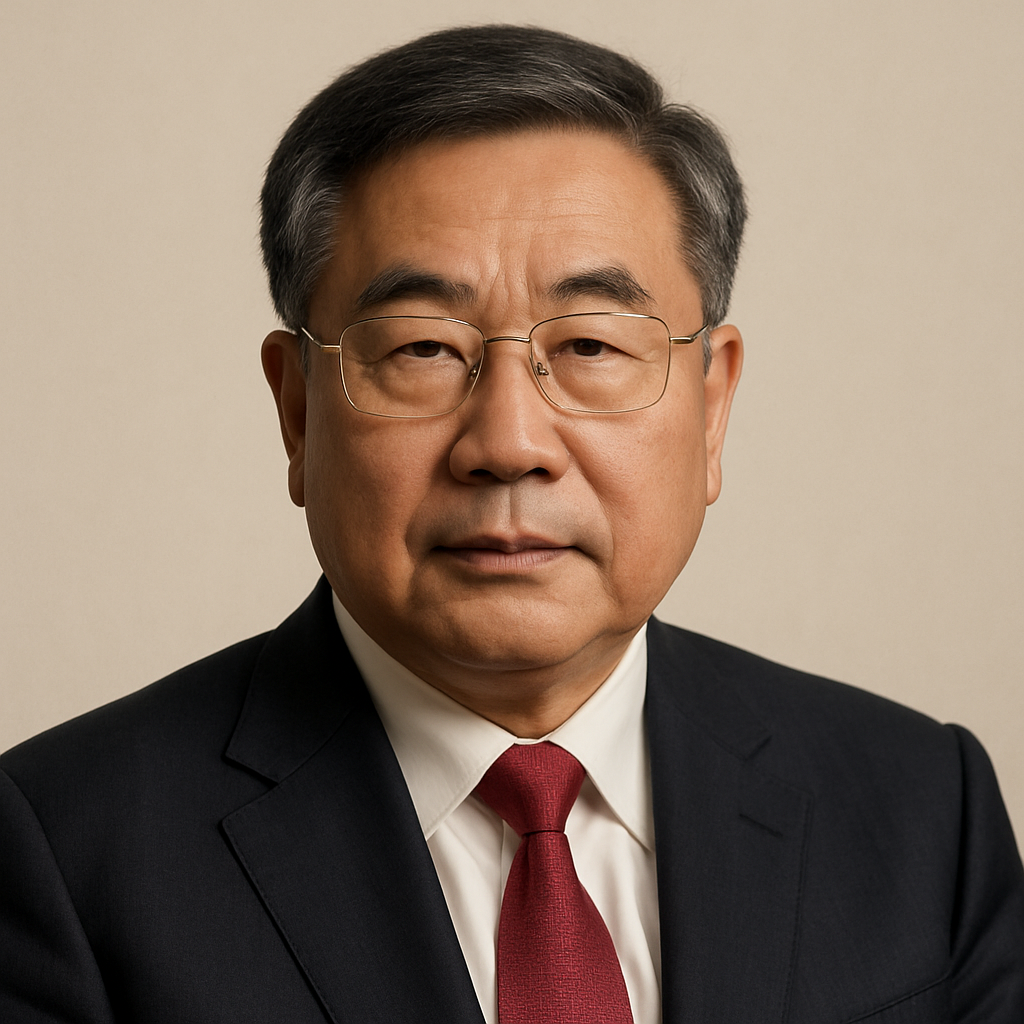
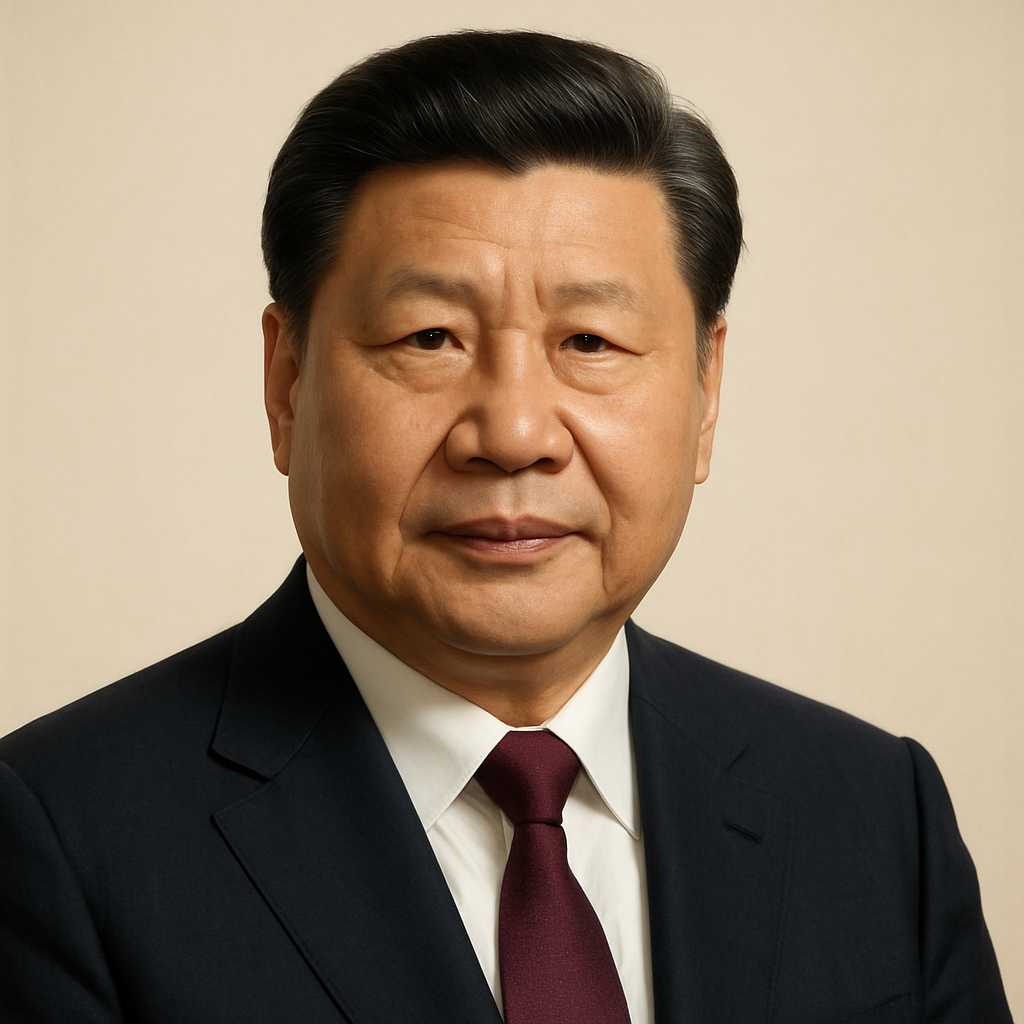
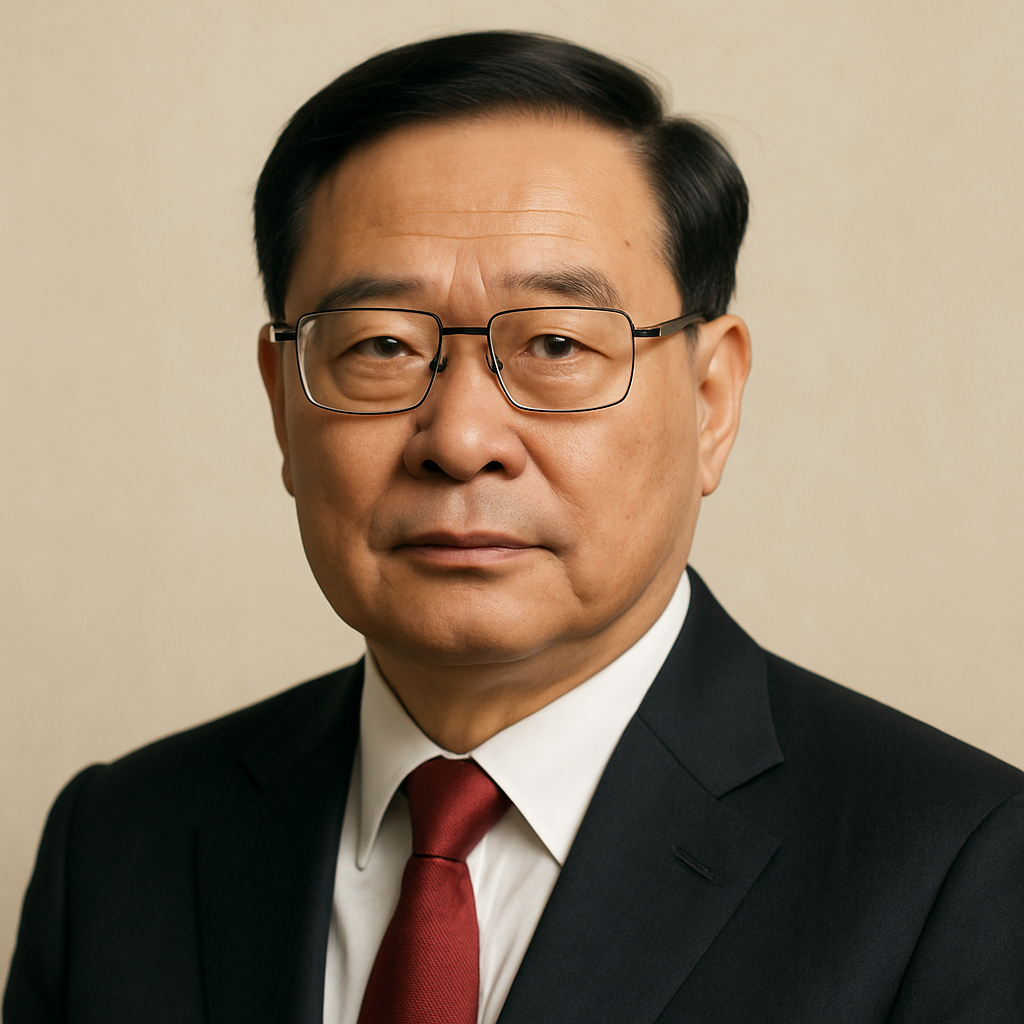
China's historical civilization dates to at least the 13th century B.C., first under the Shang (to 1046 B.C.) and then the Zhou (1046-221 B.C.) dynasties. The imperial era of China began in 221 B.C. under the Qin Dynasty and lasted until the fall of the Qing Dynasty in 1912. During this period, China alternated between periods of unity and disunity under a succession of imperial dynasties. In the 19th century, the Qing Dynasty suffered heavily from overextension by territorial conquest, insolvency, civil war, imperialism, military defeats, and foreign expropriation of ports and infrastructure. It collapsed following the Revolution of 1911, and China became a republic under SUN Yat-sen of the Kuomintang (KMT or Nationalist) Party. However, the republic was beset by division, warlordism, and continued foreign intervention. In the late 1920s, a civil war erupted between the ruling KMT-controlled government, led by CHIANG Kai-shek, and the Chinese Communist Party (CCP). Japan occupied much of northeastern China in the early 1930s, and then launched a full-scale invasion of the country in 1937. The resulting eight years of warfare devastated the country and cost up to 20 million Chinese lives by the time of Japan’s defeat in 1945. The Nationalist-Communist civil war continued with renewed intensity after the end of World War II and culminated with a CCP victory in 1949, under the leadership of MAO Zedong.
MAO and the CCP established an autocratic socialist system that, while ensuring the PRC's sovereignty, imposed strict controls over everyday life and launched agricultural, economic, political, and social policies -- such as the Great Leap Forward (1958-1962) and the Cultural Revolution (1966-1976) -- that cost the lives of millions of people. MAO died in 1976. Beginning in 1978, leaders DENG Xiaoping, JIANG Zemin, and HU Jintao focused on market-oriented economic development and opening up the country to foreign trade, while maintaining the rule of the CCP. Since the change, China has been among the world’s fastest growing economies, with real gross domestic product averaging over 9% growth annually through 2021, lifting an estimated 800 million people out of poverty and dramatically improving overall living standards. By 2011, the PRC’s economy was the second largest in the world. Current leader XI Jinping has continued these policies but has also maintained tight political controls. Over the past decade, China has increased its global outreach, including military deployments, participation in international organizations, and a global connectivity plan in 2013 called the "Belt and Road Initiative" (BRI). Many nations have signed on to BRI agreements to attract PRC investment, but others have expressed concerns about such issues as the opaque nature of the projects, financing, and potentially unsustainable debt obligations. XI Jinping assumed the positions of General Secretary of the Chinese Communist Party and Chairman of the Central Military Commission in 2012 and President in 2013. In 2018, the PRC’s National People’s Congress passed an amendment abolishing presidential term limits, which allowed XI to gain a third five-year term in 2023.
1 October 1949 (People's Republic of China established); notable earlier dates: 221 B.C. (unification under the Qin Dynasty); 1 January 1912 (Qing Dynasty replaced by the Republic of China)
National Day (anniversary of the founding of the People's Republic of China), 1 October (1949)
Eastern Asia, bordering the East China Sea, Korea Bay, Yellow Sea, and South China Sea, between North Korea and Vietnam
35 00 N, 105 00 E
Asia
slightly smaller than the US
14,500 km
mostly mountains, high plateaus, deserts in west; plains, deltas, and hills in east
coal, iron ore, helium, petroleum, natural gas, arsenic, bismuth, cobalt, cadmium, ferrosilicon, gallium, germanium, hafnium, indium, lithium, mercury, tantalum, tellurium, tin, titanium, tungsten, antimony, manganese, magnesium, molybdenum, selenium, strontium, vanadium, magnetite, aluminum, lead, zinc, rare earth elements, uranium, hydropower potential (world's largest), arable land
690,070 sq km (2012)
Yangtze - 6,300 km; Huang He - 5,464 km; Amur river source (shared with Mongolia and Russia [m]) - 4,444 km; Lancang Jiang (Mekong) river source (shared with Burma, Laos, Thailand, Cambodia, and Vietnam [m]) - 4,350 km; Yarlung Zangbo Jiang (Brahmaputra) river source (shared with India and Bangladesh [m]) - 3,969 km; Yin-tu Ho (Indus) river source (shared with India and Pakistan [m]) - 3,610 km; Nu Jiang (Salween) river source (shared with Thailand and Burma [m]) - 3,060 km; Irrawaddy river source (shared with Burma [m]) - 2,809 km; Zhu Jiang (Pearl) (shared with Vietnam [s]) - 2,200 km; Yuan Jiang (Red river) source (shared with Vietnam [m]) - 1,149 km
note: [s] after country name indicates river source; [m] after country name indicates river mouth
North China Aquifer System (Huang Huai Hai Plain), Song-Liao Plain, Tarim Basin
overwhelming majority of the population is found in the eastern half of the country; the west, with its vast mountainous and desert areas, remains sparsely populated; though ranked first in the world in total population, overall density is less than that of many Asian and European countries; high population density is found along the Yangtze and Yellow River valleys, the Xi Jiang River delta, the Sichuan Basin (around Chengdu), in and around Beijing, and the industrial area around Shenyang
frequent typhoons (about five per year along southern and eastern coasts); damaging floods; tsunamis; earthquakes; droughts; land subsidence
volcanism: China contains some historically active volcanoes including Changbaishan (also known as Baitoushan, Baegdu, or P'aektu-san), Hainan Dao, and Kunlun although most have been relatively inactive in recent centuries
note 1: world's fourth largest country (after Russia, Canada, and the US) and largest country situated entirely in Asia; Mount Everest, on the border with Nepal, is the world's tallest peak above sea level
note 2: the largest cave chamber in the world is the Miao Room, in the Gebihe cave system at China's Ziyun Getu He Chuandong National Park, which encloses about 10.78 million cu m (380.7 million cu ft); the world's largest sinkhole is the Xiaoxhai Tiankeng sinkhole in Chongqing Municipality, which is 660 m deep, with a volume of 130 million cu m
air pollution and acid rain from reliance on coal; carbon dioxide emissions from the burning of fossil fuels; water shortages, particularly in the north; water pollution from untreated wastes; coastal destruction due to land reclamation, industrial development, and aquaculture; deforestation and habitat destruction; poor land management leading to soil erosion, landslides, floods, droughts, dust storms, and desertification; trade in endangered species
extremely diverse; tropical in south to subarctic in north
41.4 micrograms per cubic meter (2019 est.)
2.84 trillion cubic meters (2022 est.)
Capability-group ratings for Critical Technology are part of the GINC National Capability Framework rather than the country factbook. They are published in the National Capability index above, and the per-capability detail lives on the capability pages.
Clinical research and life-science invention, drawn from the same series that drive the metric pages. Each card opens the full cross-country comparison.
China National Space Administration (CNSA; established in 1993); Administration for Science, Technology, and Industry for National Defense (SASTIND; subordinate to the Ministry of Industry and Information Technology); People’s Liberation Army (PLA) Aerospace Force (2025)
Jiuquan Launch Center (Inner Mongolia); Xichang Launch Center (Sichuan); Wenchang Launch Center (Hainan; Wenchang includes a commercial launch pad, the Hainan Commercial Space Launch Site, which became operational in December 2024); Taiyuan Launch Center (Shanxi); Eastern Spaceport (Shandong; a coastal spaceport designed to facilitate maritime launches) (2025)
considered one of the world’s leading space powers, with a comprehensive and ambitious space program; can manufacture and operate the full spectrum of space launch vehicles (SLVs) and spacecraft, including human-crewed, lunar/inter-planetary/asteroid probes, satellites (communications, remote sensing, navigational, scientific, etc.), space stations, and reusable space transportation; has an astronaut/taikonaut program; researches and develops a range of space-related capabilities, including advanced telecommunications, optics, spacecraft components, and satellite payloads; participates in international space programs and co-leads (with Australia and Japan) the Global Earth Observation System of Systems; has signed agreements with more than 45 national space agencies, including those of Brazil, Canada, France, and Russia, as well several international organizations; has also cooperated with ESA; two state-owned aerospace enterprises dominate space industry, but a substantial commercial space sector includes launch services (2025)
1960s - began launching rockets and initiated satellite and satellite launch vehicle (SLV) programs
1970 - launched first communications satellite (Dongfanghong I)
2003 - first manned space flight; launched first satellite for global navigational system (Beidou)
2011 - placed temporary space station (Tiangong-1) into Earth orbit
2013 - first unmanned lunar landing mission (Chang'e-3); placed a second temporary space station (Tiangong-2) in Earth orbit
2017 - employed a communications satellite (Micius) to perform the world’s first quantum-encrypted virtual teleconference between Beijing and Vienna
2019 - landed a rover vehicle (Chang’e-4) on the far side of the Moon
2021 - landed a probe and operated a rover vehicle on Mars; signed agreement with Russia to set up an international manned lunar research station; announced intent to send a manned mission to Mars by 2033
2022 - completed construction of a permanent manned space station (Tiangong) in Earth orbit
2024 - successful landing and return of robotic spacecraft/probe (Chang'e-6) from the far side the Moon; first launch of "Thousand Sails" commercial communications satellite constellation project
2025 - launched asteroid sample return mission probe (Tianwen-2); launched world's first quantum communications microsatellite (Jinan-1)
552 (2025)
120 (2025)
B
.cn
People's Liberation Army (PLA): Ground Forces or People's Liberation Army Army (PLAA), Navy (PLAN, includes Marine Corps (PLANMC)), Air Force (PLAAF), Rocket Force (PLARF), Aerospace Force (ASF), Cyberspace Force (CSF), Information Support Force (ISF), Joint Logistics Support Force (JLSF); People's Armed Police (PAP, includes Coast Guard, Border Defense Force, Internal Security Forces); PLA Reserve Force (2025)
approximately 2 million active-duty PLA (950,000-1 million Ground; 250,000 Navy, including about 50,000 Marines; 350-400,000 Air Force; 120,000 Rocket Forces; 150-175,000 other forces) (2025)
the PLA is mostly equipped with domestically produced armaments with smaller amounts of imported weaponry, largely from Russia; China has one of the world's largest defense-industrial sectors and is capable of producing advanced weapons systems across all military domains (2025)
18-26 years of age depending on education level for men and women for both volunteer and selective compulsory military service; 24-month service obligation (2025)
Active-duty strength on the Correlates of War series, which reaches back to 1816 and so carries a nation’s whole record of mobilisation rather than its present establishment. The card opens the full cross-country comparison.
475 Lebanon (UNIFIL); 1,050 South Sudan (UNMISS); 280 Sudan/South Sudan (UNISFA); has also established a base in Djibouti with approximately 400 marines, plus naval and support personnel (2025)
the People's Liberation Army (PLA) is the world’s largest military; the PLA's primary responsibility is external security but it also has some domestic security duties; China’s stated defense policy includes safeguarding sovereignty, security, and development interests while emphasizing a greater global role for the PLA; the PLA conducts air, counterspace, cyber, electronic warfare, joint, land, maritime, missile, nuclear, and space operations; it trains regularly, including multinational and multiservice exercises, deploys overseas, and participates in international peacekeeping missions
the PRC's internal security forces consist primarily of the Ministry of Public Security (MPS), the Ministry of State Security (MSS), the People’s Armed Police (PAP), and the militia; the PLA support the internal security forces as necessary:
--the MPS controls the civilian national police, which serves as the first-line force for public order; its primary mission is domestic law enforcement and maintaining order, including anti-rioting and anti-terrorism
--the MSS is the PRC’s main civilian intelligence and counterintelligence service
--the PAP is a paramilitary component (or adjunct) of the PLA; its primary missions include internal security, maintaining public order, maritime security, and assisting the PLA in times of war; the China Coast Guard (CCG) administratively falls under the PAP and has a variety of missions, such as maritime sovereignty enforcement, surveillance, resource protection, anti-smuggling, and general law enforcement; it is the largest maritime law enforcement fleet in the world
--the militia is an armed reserve of civilians which serves as an auxiliary and reserve force for the PLA upon mobilization, although it is distinct from the PLA’s reserve forces; militia units are organized around towns, villages, urban sub-districts, and enterprises, and vary widely in composition and mission; they have dual civilian-military command structures; a key component of the militia are the local maritime forces, commonly referred to as the People’s Armed Forces Maritime Militia (PAFMM); the PAFMM consists of mariners (and their vessels) who receive training, equipment, and other forms of support from the Navy and CCG (although the PAFMM remains separate from both) to perform tasks such as maritime patrolling, surveillance and reconnaissance, emergency/disaster response, transportation, search and rescue, and auxiliary tasks in support of naval operations in wartime; the PAFMM’s tasks are often conducted in conjunction or coordination with the Navy and the CCG; it has been used to assert Beijing's maritime claims in the Sea of Japan and South China Sea (2025)
-0.08% (2025 est.)
7.28 births/1,000 population (2025 est.)
7.97 deaths/1,000 population (2025 est.)
1.2 children born/woman (2025 est.)
0.57 (2025 est.)
69.5% (2021 est.)
in October 2015, the Chinese Government announced that it would change its rules to allow all couples to have two children, loosening a 1979 mandate that restricted many couples to one child; the new policy was implemented on 1 January 2016 to address China’s rapidly aging population and future economic needs
-0.11 migrant(s)/1,000 population (2025 est.)
29.211 million Shanghai, 21.766 million BEIJING (capital), 17.341 million Chongqing, 14.284 million Guangzhou, 14.239 million Tianjin, 13.073 million Shenzhen (2023)
16 deaths/100,000 live births (2023 est.)
3.11 physicians/1,000 population (2022)
5 beds/1,000 population (2020 est.)
6.2% (2016)
2.4% (2013)
Modelled share of working-age adults using generative AI, from Microsoft telemetry scaled to each country’s 15–64 population. A measure of how fast a workforce is absorbing the technology rather than of how much of it a nation builds. The card opens the full cross-country comparison.
0% (2020 est.)
communist party-led state
23 provinces (sheng, singular and plural), 5 autonomous regions (zizhiqu, singular and plural), 4 municipalities (shi, singular and plural), and two special administrative regions (tebie xingzhengqu, singular and plural)
provinces: Anhui, Fujian, Gansu, Guangdong, Guizhou, Hainan, Hebei, Heilongjiang, Henan, Hubei, Hunan, Jiangsu, Jiangxi, Jilin, Liaoning, Qinghai, Shaanxi, Shandong, Shanxi, Sichuan, Yunnan, Zhejiang; (see note on Taiwan)
autonomous regions: Guangxi, Nei Mongol (Inner Mongolia), Ningxia, Xinjiang Uyghur, Xizang (Tibet)
municipalities: Beijing, Chongqing, Shanghai, Tianjin
special administrative regions: Hong Kong, Macau
18 years of age; universal
civil law influenced by Soviet and continental European civil law systems; legislature retains power to interpret statutes
has not submitted an ICJ jurisdiction declaration; non-party state to the ICCt
Chinese Communist Party or CCP
folk religion 21.9%, Buddhist 18.2%, Christian 5.1%, Muslim 1.8%, Hindu < 0.1%, Jewish < 0.1%, other 0.7% (includes Daoist (Taoist)), unaffiliated 52.1% (2021 est.)
Han Chinese 91.1%, ethnic minorities 8.9% (includes Zhang, Hui, Manchu, Uighur, Miao, Yi, Tujia, Tibetan, Mongol, Dong, Buyei, Yao, Bai, Korean, Hani, Li, Kazakh, Dai, and other nationalities) (2021 est.)
dragon, giant panda
Imperial Palaces of the Ming and Qing Dynasties (c); Mausoleum of the First Qin Emperor (c); The Great Wall (c); Summer Palace, an Imperial Garden in Beijing (c); Jiuzhaigou Valley Scenic and Historic Interest Area (n); Historic Ensemble of the Potala Palace, Lhasa (c); Ancient Ancient City of Ping Yao (c); Historic Center of Macau (c); Historic Monuments of Dengfeng in “The Centre of Heaven and Earth” (c); The Grand Canal (c); Mount Huangshan (m); Mogao Caves (c); Mount Taishan (m); Peking Man Site at Zhoukoudian(c); Huanglong Scenic and Historic Interest Area (n);Wulingyuan Scenic and Historic Interest Area (n); Ancient Building Complex in the Wudang Mountains (c); Mountain Resort and its Outlying Temples, Chengde (c); Temple and Cemetery of Confucius and the Kong Family Mansion in Qufu (c); Lushan National Park (c); Mount Emei Scenic Area, including Leshan Giant Buddha Scenic Area (m); Classical Gardens of Suzhou (c); Old Town of Lijiang (c); Temple of Heaven: an Imperial Sacrificial Altar in Beijing (c); Dazu Rock Carvings (c); Mount Wuyi (m); Ancient Villages in Southern Anhui – Xidi and Hongcun (c); Imperial Tombs of the Ming and Qing Dynasties (c); Longmen Grottoes (c); Mount Qingcheng and the Dujiangyan Irrigation System (c); Yungang Grottoes (c); Three Parallel Rivers of Yunnan Protected Areas (n); Capital Cities and Tombs of the Ancient Koguryo Kingdom (c); Sichuan Giant Panda Sanctuaries - Wolong, Mt. Siguniang, and Jiajin Mountains (c); Yin Xu (c); Kaiping Diaolou and Villages (c); South China Karst (n); Fujian Tulou (c); Mount Sanqingshan National Park (n); Mount Wutai (c); China Danxia (n); West Lake Cultural Landscape of Hangzhou (c); Chengjiang Fossil Site (n); Site of Xanadu (c); Cultural Landscape of Honghe Hani Rice Terraces(c); Xinjiang Tianshan (n); Silk Roads: the Routes Network of Chang'an-Tianshan Corridor (c); Tusi Sites (c); Hubei Shennongjia (n); Zuojiang Huashan Rock Art Cultural Landscape (c); Kulangsu, a Historic International Settlement (c); Qinghai Hoh Xil (n); Fanjingshan (n); Archaeological Ruins of Liangzhu City (c); Migratory Bird Sanctuaries along the Coast of Yellow Sea-Bohai Gulf of China (n); Quanzhou: Emporium of the World in Song-Yuan China (c); Cultural Landscape of Old Tea Forests of the Jingmai Mountain in Pu’er (c); Badain Jaran Desert - Towers of Sand and Lakes (n); Beijing Central Axis: A Building Ensemble Exhibiting the Ideal Order of the Chinese Capital (c); Xixia Imperial Tombs (c)
description: red with a large five-pointed yellow star and four smaller ones in the upper-left corner; the small stars are arranged in a vertical arc around the large one
meaning: red represents revolution; the stars symbolize the four social classes -- the working class, the peasantry, the urban petty bourgeoisie, and the national bourgeoisie (capitalists) -- united under the Communist Party of China
red, yellow
all broadcast media are owned by, or affiliated with, the Chinese Communist Party (CCP) or a government agency; no privately owned TV or radio stations; state-run Chinese Central TV, provincial, and municipal stations offer more than 2,000 channels; the Central Propaganda Department and local (provincial, municipal) officials direct news reporting and approve all programming; foreign-made TV programs must be approved/censored prior to broadcast; widespread use of online platforms (Bilibili, Tencent Video, iQiyi, etc) to access domestic and international films and TV shows; Cyberspace Administration of China (CAC) regulates video platforms (2022)
China maintains resident diplomatic missions in 176 countries across 7 world regions.
177 countries maintain a resident diplomatic mission in China.
ADB, AfDB (nonregional member), APEC, Arctic Council (observer), ARF, ASEAN (dialogue partner), BIS, BRICS, CDB, CICA, EAS, FAO, FATF, G-20, G-24 (observer), G-5, G-77, IADB, IAEA, IBRD, ICAO, ICC (national committees), ICRM, IDA, IFAD, IFC, IFRCS, IHO, ILO, IMF, IMO, IMSO, Interpol, IOC, IOM (observer), IPU, ISO, ITSO, ITU, LAIA (observer), MIGA, MINURSO, MONUSCO, NAM (observer), NSG, OAS (observer), OPCW, Pacific Alliance (observer), PCA, PIF (partner), SAARC (observer), SCO, SICA (observer), UN, UNAMID, UNCTAD, UNESCO, UNFICYP, UNHCR, UNHRC, UNIDO, UNIFIL, UNISFA, UNMIL, UNMISS, UNOCI, UNOOSA, UN Security Council (permanent), UNTSO, UNWTO, UPU, WCO, WHO, WIPO, WMO, WTO, ZC
7.6% (of GDP) (2023 est.)
world’s second-largest economy by nominal GDP; global leader in exports and manufacturing; historically strong growth slowing; challenges of aging workforce, weak productivity, rising youth unemployment, struggling property sector, and public debt; state-sponsored economic controls and infrastructure investments
$18.744 trillion (2024 est.)
maize, rice, vegetables, wheat, sugarcane, potatoes, cucumbers/gherkins, tomatoes, watermelons, pork (2023)
world leader in gross value of industrial output; mining and ore processing, iron, steel, aluminum, and other metals, coal; machine building; armaments; textiles and apparel; petroleum; cement; chemicals; fertilizer; consumer products (including footwear, toys, and electronics); food processing; transportation equipment, including automobiles, railcars and locomotives, ships, aircraft; telecommunications equipment, commercial space launch vehicles, satellites
5.3% (2024 est.)
773.88 million (2024 est.)
USA 13%, Hong Kong 8%, Japan 5%, Germany 5%, S. Korea 4% (2023)
broadcasting equipment, computers, integrated circuits, garments, machine parts (2023)
S. Korea 7%, USA 7%, Japan 6%, Australia 6%, Russia 6% (2023)
crude petroleum, integrated circuits, iron ore, gold, natural gas (2023)